
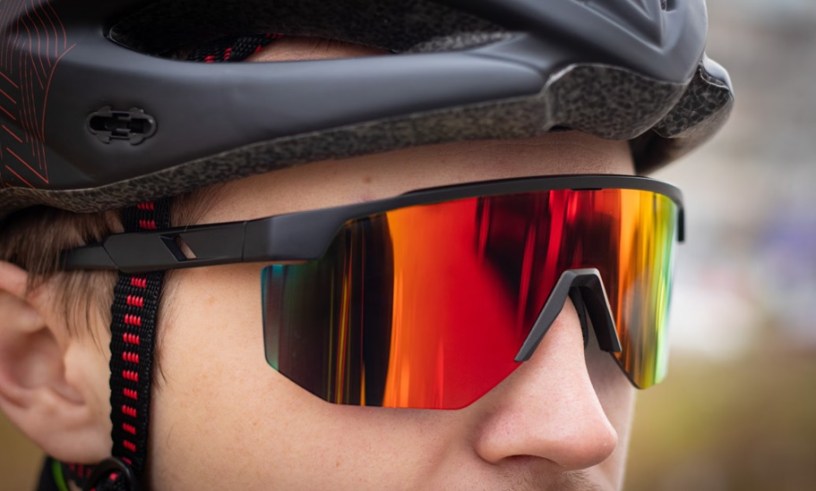
For most people, sunglasses are a summer staple—thrown into bags, worn on the beach, maybe left on the dashboard a little too long. But in the world of sport, eyewear has become much more than a style choice. The question is: can sports sunglasses actually improve performance, or are they just another accessory that looks the part?
We spent the past few weeks testing them out across a range of activities—running, cycling, tennis, hiking, and even paddleboarding—to see if they live up to the hype.
A Clearer View of the Game
One of the first things we noticed is how much sharper everything appears through high-performance lenses. It’s not just about dimming the sun; it’s about filtering out the glare and enhancing contrast in a way that makes movement feel more precise. When cycling, for instance, seeing potholes, grit, or a change in road surface half a second earlier can make a big difference. Likewise, for tennis players, tracking a fast-moving ball against a bright sky becomes less of a squinting contest.
Lens technology has come a long way. Many sports sunglasses now use tints specifically tailored for different environments—amber or rose-tinted lenses for trail running, grey lenses for bright open spaces, and polarised lenses for water and snow. It’s all about reducing strain while improving visual accuracy.
The Hidden Cost of Glare
Glare doesn’t just make you wince; it affects your reaction time and judgment. On the tennis court, it can be the difference between a clean return and a wild swing. On a mountain trail, it might mean tripping over a root you didn’t see coming. Good sports sunglasses don’t just cut brightness—they control it. This subtle filtering improves depth perception and allows you to relax your eyes, which in turn helps maintain focus during longer sessions.
One runner on our team noticed that their usual post-run headaches disappeared when wearing a pair of wraparound glasses with anti-glare coating. It’s something you might not notice immediately, but once you experience the difference, it’s hard to go back.
Comfort and Fit: More Than Vanity
Let’s talk about the feel of them—because performance eyewear is very different to your average pair of shades. The wrong fit can distract you with slipping, pinching, or bouncing. But a good pair? You almost forget you’re wearing them. Rubberised grips on the nose and arms, lightweight frames, and wraparound designs all play a part. Especially during high-impact or high-sweat activities, a stable fit is essential.
During our trail run, one tester remarked that their sunglasses “stayed exactly where they should, no matter how much I moved.” That’s not a small detail—it’s something that allows you to focus fully on your stride, terrain, and rhythm.
Eye Protection: UV, Wind and Everything Else
Let’s not overlook the basics. Good sports eyewear blocks 100% of UVA and UVB rays. That’s a non-negotiable for anyone spending long hours outside, and it’s not just about avoiding squinting or sunburn around your eyes. Prolonged exposure to UV can lead to long-term eye issues like cataracts and macular degeneration.
But UV protection isn’t the only benefit. Wind resistance is another. Cyclists and downhill skiers will know how tiring it is to constantly battle watery eyes or debris kicked up from the road. A wraparound frame forms a barrier that keeps wind and particles out, allowing for uninterrupted vision and reducing risk of irritation or even minor injury.
Real-Life Test: Paddleboarding and the Risk of Splash
One of the more unexpected wins came from paddleboarding, where glare from the water is relentless and movement is constant. One tester used a floating pair with polarised lenses and reported less eye strain, improved visibility in the water (great for avoiding rocks), and a surprising boost in confidence. “I just felt more capable,” they said. “Less distracted, more in control.”
That sense of control and clarity turns out to be a common thread across all the activities we tested. It might not make you faster in the stopwatch sense, but it can definitely make you better—more focused, more efficient, and far less prone to distractions or mistakes.
So, can sports sunglasses boost performance? Based on our testing: yes. Not because they’re some magical piece of kit, but because they solve problems you might not even realise you’re having—until you don’t have them anymore.
Better contrast means better decisions. Less squinting means less fatigue. And a proper fit means fewer distractions. When you add it all up, you get something that supports both comfort and concentration—two things that play a huge role in how well you perform, whether you’re running a 10K or playing a casual game of five-a-side.
They’re also becoming increasingly customisable, with interchangeable lenses, prescription options, and frame shapes to suit different sports. So if you’ve been thinking of upgrading your kit, eyewear might be the most underrated place to start.
 Sports Blog